March 9, 2026
Part of Governance, Democracy & Economic Policy Series →
An Iranian warship was torpedoed in international waters. The US left. Sri Lanka came. The Pentagon called it a victory.
I am not a war historian. I don’t pretend to know the classified briefings, the naval strategies, or the calculations made in the Pentagon’s war rooms.
What I do know is law. And morality. And ethics. And politics.
I can see a story coming from fifty feet away when it’s about to break. I can smell when the official version doesn’t match the evidence. I can spot when power is dressing up revenge as victory.
This is one of those stories.
An Iranian warship, returning from a ceremonial exercise the United States attended, was torpedoed in international waters. No warning. No threat. No rescue.
Eighty-seven bodies recovered. Dozens still missing. A neutral country—Sri Lanka—pulled survivors from the water. The submarine that fired simply left.
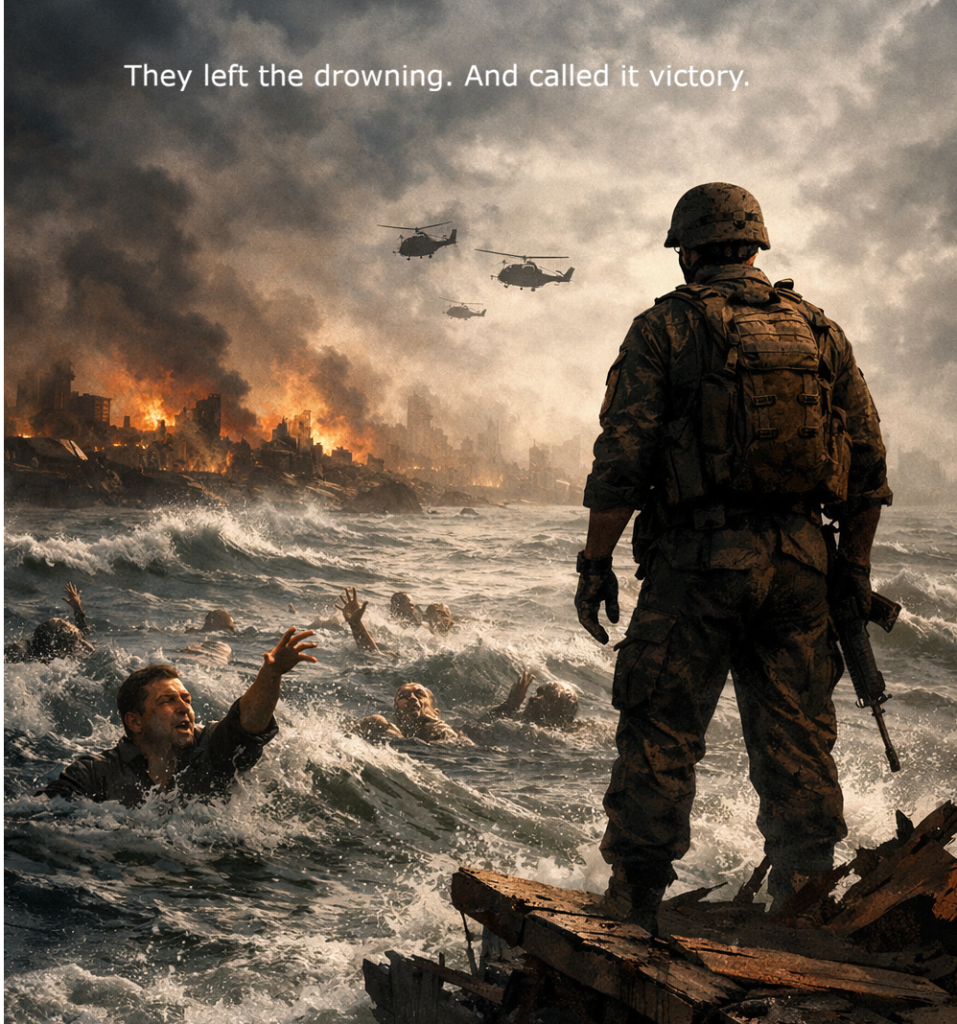
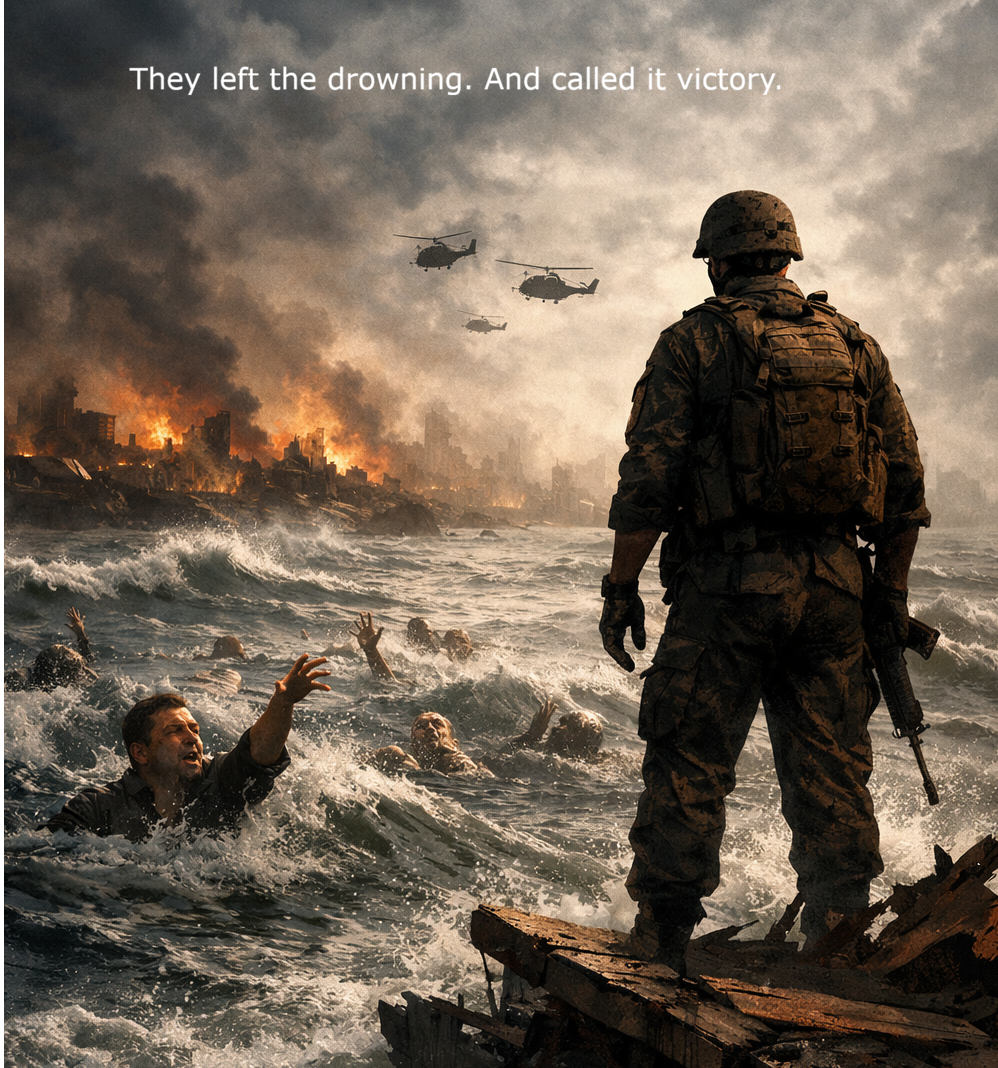
The Pentagon called it a “quiet death.” They called it victory.
I call it something else.
Here’s why.
I. The Ship That Never Had a Chance
The IRIS Dena was a Moudge-class frigate, part of the Iranian navy. In late February 2026, it sailed to India to participate in MILAN 2026—a massive multinational naval exercise hosted by the Indian Navy. The name “MILAN” means “meeting” or “convergence.” It’s supposed to be about friendship, cooperation, and trust between navies.
The United States was there. An American P-8A Poseidon—the Navy’s most advanced surveillance aircraft—flew the entire exercise alongside the Dena. American pilots watched Iranian sailors march in parades. They tracked the ship’s movements. They knew exactly where it was, what it was doing, and where it was going.
When the exercise ended, the Dena began its journey home. It sailed southwest, alone, through international waters off the coast of Sri Lanka. It was not in a combat zone. It was not threatening any vessel. It was simply heading back to Iran.
The P-8A kept watching.
Then, on March 4, an American submarine fired an MK-48 torpedo. The Dena sank in minutes. It was the first time the U.S. Navy had sunk an enemy warship with a torpedo since World War II.
The Pentagon was proud. Secretary of Defense Pete Hegseth called it a “quiet death.” General Caine counted it on a scoreboard: “We’ve destroyed 20+ Iranian vessels.” The message was clear: this was victory.
II. What Victory Looked Like From the Water
When the ship went down, 180 Iranian sailors were suddenly in the Indian Ocean. Some were wounded. Some were dying. Some were already dead.
The submarine that fired the torpedo did not surface. It did not stay to help. It did not call for anyone else to help. It simply left.
Here is what international law says about moments like this.
The Geneva Convention for the Amelioration of the Condition of Wounded, Sick and Shipwrecked Members of Armed Forces at Sea—which the United States ratified in 1955—states in Article 18:
“After each engagement, Parties to the conflict shall, without delay, take all possible measures to search for and collect the shipwrecked, wounded and sick… to search for the dead and prevent their being despoiled.”
It does not say “if convenient.” It does not say “if safe.” It says “all possible measures.”
Sri Lanka, a neutral country with no stake in this war, understood this. They dispatched naval vessels and an aircraft. They pulled 32 sailors from the water. They recovered 87 bodies. They provided medical care. They did what the law requires—what basic humanity requires.
The United States, which sank the ship, did nothing.
III. The Question No One Is Asking
In 2025, a civilian flotilla carrying medical aid and baby formula to Gaza was bombed by a drone off Malta. UN experts called it a violation of international law. Israel claimed it was a security threat.
In 2026, an Iranian warship returning from a ceremonial exercise—unarmed, alone, tracked by US surveillance—was torpedoed in international waters. The US called it victory.
One ship carried food to starving children. The other carried sailors home from a parade.
The US and Israel treated the food ship as a threat. They treated the warship as a target.
Ask yourself: if the standard is “any vessel flying an enemy flag is fair game,” why was the flotilla attacked?
And if the standard is “humanitarian vessels must be protected,” why was the Dena not spared?
The answer has nothing to do with international law. It has everything to do with whose flag they flew.
IV. The Lesson of the Laconia
This is not the first time the world has faced this question.
In 1942, a German submarine sank the British troopship Laconia off the coast of Africa. The German commander, Kapitänleutnant Werner Hartenstein, did something unexpected. He surfaced his U-boat and began rescuing survivors. He strung up Red Cross flags and broadcast an open radio message asking for help.
An American bomber, flying from a secret base on Ascension Island, attacked the U-boat anyway. The bombs struck near the sub, forcing Hartenstein to dive. Survivors still in the water were left behind.
After the war, Admiral Karl Dönitz, Germany’s top submarine commander, was put on trial at Nuremberg. One of the charges against him was that he issued the “Laconia Order”—a directive that forbade German U-boats from rescuing survivors.
Then something remarkable happened. Admiral Chester Nimitz, the Commander of the U.S. Pacific Fleet, testified under oath. He stated that American submarines in the Pacific operated under the same policy. They did not rescue Japanese survivors because it would endanger their boats.
Dönitz was convicted on that charge. But the tribunal did not punish him for it. The reason? The Americans had done the same thing.
The message was clear: if everyone does it, no one is guilty.
For eighty years, that was the precedent. The U.S. had testified that rescue was optional. But they never actually acted on it. Not against a ship. Not against sailors in the water.
Until now.
V. Why This Ship? Why at This Moment?
The P-8A had been watching the Dena for days. The US knew exactly where it was, where it was going, and that it was alone.
There was no military necessity to strike that night. The ship was 2,000 miles from the nearest combat zone, heading home from a party the US had attended.
But the Pentagon needed a win. They’d been at war for days. They needed to show they could reach anywhere, anytime, against anything that flew an Iranian flag.
So they chose a ship that couldn’t fight back. They fired without warning. And when the water filled with drowning men, they left.
Sri Lanka came. The United States did not.
That’s not strategy. That’s a message. And the message is: we can do whatever we want, and we will call it victory.
VI. The Lesson of 2026
Pete Hegseth has been explicit about his view of the world. He has called the “rules-based international order” a myth. He has said that great powers do not ask permission—they act. The only law, in his words, is victory.
Now we know what that looks like.
Victory looks like a ship at the bottom of the ocean.
Victory looks like 32 sailors rescued by a country not at war.
Victory looks like 87 bodies recovered, and dozens more still missing, while the submarine that killed them sails home without looking back.
The Laconia Order was a warning. For eighty years, it sat in the history books as a reminder of what happens when war strips away humanity.
In 2026, it became a template.
The U.S. helped create the rule that rescue is optional. They testified to it at Nuremberg. They embedded it in the precedent that let Dönitz walk.
Now, for the first time, they have acted on it.
And they called it victory.
VII. The Question That Remains
The ship was a warship. Under the strict letter of the law, it was a legitimate target. That much is true.
But the law was never meant to stop at the moment of the strike. It was meant to govern what happens after.
The sailors in the water were no longer combatants. They were shipwrecked. And the law is clear: when people are drowning, you try to save them.
Sri Lanka understood this. A neutral country, with no obligation to anyone, did what the law requires—what humanity requires.
The United States, which sank them, did nothing.
So the question is not whether the ship should have been targeted. The question is what kind of power leaves the drowning and calls it victory.
Eighty years ago, the U.S. helped write the rule that rescue is optional. In 2026, they finally used it.
And they called it strength.
I call it something else.
#EthicsInWar #IRISDena #LaconiaOrder #GenevaConvention #NavalHistory #JustWar #TheEthicalTechnocrat #Sovereignty #WarCrimes #InternationalLaw
Sophia Bekele
On Law, Governance, and the Architecture of Power
Founder, DotConnectAfrica Group & CBSegroup | Publisher, The Ethical Technocrat