Did the AUC-Aligned ZACR Actually Deliver .africa?

Sophia Bekele, founder of DotConnectAfrica Trust, photographed for a 10-year retrospective Q&A on the .africa domain, accountability, and the AUC's role


March 17,  2026

This article is part of the .africa Commentary Series — a living archive of analysis, precedent, and warning from the architect of the .africa domain


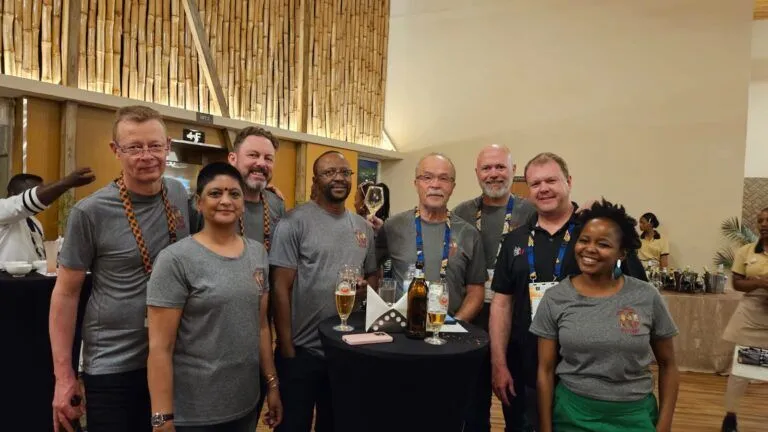
In July 2024, the prople who took .africa gathered in Kigali to celebrate a decade in the industry. Photos were taken. Speeches were made. “Visionaries” were thanked.  The photo was published on their own website in July 2024.

I did not attend. I was not invited. I would not have gone. No media covered it. It never came to my attention — not until this month, when someone sent me the link and asked:

“Did you see this?”

I hadn’t. But once I did, one question followed:

After a decade, did they actually deliver?


The Origin

In 2009, DotConnectAfrica proposed the .africa domain name to the African Union Commission. Deputy Chairperson Erastus Mwencha later confirmed this under oath to ICANN:

We only heard of .africa and ICANN from DCA.” – AUC Deposition at ICANN

It was DCA — not the AUC, not any government, not any other entity — that first brought the vision of a continental digital identity to Africa’s highest political body.

Following that proposal, the African Heads of State, through the Oliver Tambo Declaration (2009) and the Abuja Declaration (2010) , mandated the AUC to deliver .africa — a digital identity for the continent.

DotConnectAfrica was endorsed by both the AUC and the UN Economic Commission for Africa (2008). The vision was clear. The path was set.

Then comes the turn

The African Union Commission’s original involvement was not hostile to DCA

In fact, in 2008, DCA had received formal endorsement from both the AUC — under Chairman Jean Ping — and the UN Economic Commission for Africa. The vision was recognised. The architect was legitimate.

After DCA’s press release, ICANN staff approached the AUC to simply reserve the .africa name for itself — to protect it from being claimed by any private party.

But somewhere in that process, the AUC’s role shifted. Rather than acting as a protector of the name on behalf of all Africans, the AUC decided it wanted to control who ran the registry. It withdrew its endorsement of DCA — the organisation that had first brought it the vision — and attempted to select its own preferred registry, ZACR, to apply to ICANN directly.

That AUC attempt failed. DCA opposed it and won at the ICANN meeting in Dakar, where the AUC’s request was formally put forward and rejected for violating ICANN’s own rules.

Having failed through that route, ICANN then advised the AUC to join ICANN’s Governmental Advisory Committee — the GAC — and use that platform to formally object to DCA’s application.

The GAC, by design, carries significant weight in ICANN’s decision-making process. An objection from a bloc of African governments, lodged through the GAC, would be far harder to ignore than a direct request.

That is exactly what happened next. And that is where the quid pro quo begins

The Timeline of Manipulation – ICANN’s quid pro quo 


At ICANN public meetings, AUC representative Muctad Yadely stood up and stated openly — on the record:

“We will not support ICANN unless they stop DCA.”

This was not backroom dealing.  This was a public declaration of the terms. An African Union representative, at an ICANN public forum, making the quid pro quo explicit:

African political support in exchange for blocking the legitimate applicant.ICANN heard it.

ICANN accepted those terms. And ICANN delivered.

In exchange for that endorsement, ICANN promised to deliver .africa to the AUC’s aligned registry.

The AUC, in turn, was led to believe it would retain oversight of .africa.  Behind the scenes, ZACR signed a separate agreement with the AUC, effectively reassigning operational control of the registry.  The AUC, in turn, was led to believe it would retain oversight of .africa — perhaps even a share of the revenue.

Never mind that this violated the very rules I helped draft during my term as an ICANN policy advisor. The ICANN Applicant Guidebook, which I co-authored, explicitly forbids such reassignments.

The system moved ZACR forward at every opportunity — even signing a registry agreement before DCA’s IRP was resolved. Then, when DCA won, ICANN was forced to restart the evaluation, only to apply the most rigid possible reading of the “government support” rule.

A U.S. federal court later independently confirmed what DCA had been saying all along — finding explicitly that “the AUC’s relationship with ZACR, and its interest in preventing the delay of issuing rights to .Africa, creates a conflict of interest.
That is not an allegation. That is a federal court’s own words.
 
The fix was in. The rulebook was ignored. And the architect was locked out.


The Rigged RFP at AUC Level

ZACR was selected through an AUC-led Request for Proposal process. But here’s what the AUC never disclosed:

ZACR was the only participant in the bid.

Why? Because the AUC’s RFP contravened ICANN’s own RFP process — making it impossible for other qualified applicants, including DotConnectAfrica, to participate in good faith.

DotConnectAfrica had raised concerns about the RFP’s alignment with ICANN’s Applicant Guidebook. When those concerns were ignored, DCA made the strategic decision not to participate in a process that was already structurally compromised.

The AUC’s RFP documents, published in November 2011, revealed a process designed to produce a predetermined outcome. And the evaluators?

They were the same people who had publicly aligned themselves with ZACR.

In July 2012, a select group from the African Internet community — circulated a document titled “Facts Regarding the African Union Commission (.Africa) application.” The document, also shared by Alice Munyua, laid out the AUC/ZACR position point by point, all were known supporters of the AUC/ZACR position.  All signatories were known supporters of the ZACR bid.

What was not disclosed at the time — but was later established in deposition testimony, carrying the same legal weight as the Mwencha deposition — is that Alice Munyua was a paid consultant to ZACR. She was not a neutral observer. She was an advocate on ZACR’s payroll, participating in what was presented as an independent community process..

The evaluators were not neutral arbiters. They were advocates — embedded in the very process they were supposed to oversee objectivly

This was not an open and transparent RFP. This was a closed-door alignment dressed up as a competitive process.


The Rigged RFP at ICANN Level

The rigging did not stop at the AUC. At ICANN, ZACR executed a strategic two-step that the system allowed.

Step One: The “Community Application” Masquerade

ZACR campaigned aggressively as a “community application” — a special designation under ICANN’s rules that carries advantages in the evaluation process. They claimed majority support from African governments and positioned themselves as the authentic voice of the continent.

Step Two: The Switch

When it came time to apply, ZACR did not apply as a community application. They applied as an individual applicant — the same category as DCA.

This was not an accident. It was a calculated move to:

  • Use the political cover of community support during campaigning

  • Avoid the strict scrutiny that comes with community applications

  • Benefit from the endorsements without the obligations

ICANN knew this. And ICANN allowed it.

Meanwhile, DCA’s application was subjected to relentless scrutiny. ICANN delayed its evaluation at every turn — asking for more documentation, more proof, more endorsements — while ZACR’s application moved forward on a parallel track.

The result? DCA was held to the highest standard. ZACR was held to none.


The .ZA Credential — Unverified Then and Now

ZACR’s primary credential for winning the .africa bid was their management of .ZA — South Africa’s country code. In January 2015, they announced that .ZA had surpassed 1 million domains .

The press releases celebrated. The headlines were written. But the question no one asked at the time — and few have asked since — is: how many of those were actually active?

Industry observers at the time suspected that a significant portion of the 1 million figure consisted of dead or unpaid registrations — domains that had expired but remained in the count. Domain Incite, a respected industry publication, noted with pointed skepticism that the registry’s reporting might not be entirely reliable .

The exact words:

“So perhaps the numbers the company are reporting are not entirely reliable.”

No independent audit was ever produced. No verification was ever offered. The 1 million figure was simply asserted, then repeated, then treated as fact.

What we know today, from subsequent reporting, is that .CO.ZA — the largest component of .ZA — saw deletions surpassing creations in 2023, resulting in a net loss of nearly 15,000 domains . That is not the behavior of a healthy, growing namespace. It is the behavior of a registry propped up by numbers that were never fully vetted.

The 1 million figure may have been true in the narrowest sense — domains ever registered, including those long expired. But as a measure of active, paying, operational registrations, it was always questionable.

And yet, that unverified number was used to persuade the AUC that ZACR had the capacity to run .africa.

What They Promised vs. What They Delivered

When ZACR applied to run .africa, they pointed to their management of .co.za as proof of capacity. At the time, .co.za had grown to 842,000 registrations over 17 years — serving a country of 63 million people at a rate of nearly 50,000 domains per year.:

The Numbers — 10 Years Later

What we can verify, through multiple independent sources, is this:

Note: In its first year, .africa typically saw ~22,000 registrations — many of them defensive registrations on reserved names. Subtract those, and the organic growth over the remaining nine years drops to ~33,000 domains, or just ~3,700 per year.

For a market 25 times larger, ZACR delivered a growth rate 9 times slower — and without the initial defensive registrations, it’s nearly 13 times slower. That is not growth. That is stagnation.

If ZACR had performed for Africa at even half the rate they claimed for South Africa, .africa would have over 200,000 domains today. Instead, they’re at 55,000 — and celebrating.


That is not growth. That is stagnation.

The Phantom Ranking (76th)

Registry Africa claims .africa ranks 76th among new gTLDs, citing NTLDStats.com. But they provide no link to this data.The proof is in their own website.  In July 2024, they published a celebration on their website, repeating the same 76th-place claim — still with no link, no source, no verification. 

But before ZACR existed, during the Yes2DotAfrica campaign— six years of global awareness built by DCA — .africa was already ranked among the top 50 most attractive domains in preregistration, in joint marketing with United Domains, a leading global registrar.

ZACR inherited a top‑50 market – The attention wasn’t theirs. It was inherited. A decade later, ZACR sits at unverified 76th — a 26‑place decline. If they had built on your success, they should have moved up, not down. 

ICANN- are you reading?

Therefore, the numbers they now claim as success — the rankings, the awareness, the global interest — did not even come from them. ZACR inherited a market it did not build and has failed to grow.   

When we checked NTLDStats for the registry group “ZA Central Registry NPC,” the page showed 3 TLDs and 9,727 domains — their city TLDs (.capetown, .joburg, .durban). .africa is not even in that count.

The 76th place ranking is impossible to prove. They have offered no verifiable source, no direct link, no screenshot.


If 55,000 domains does place .africa around 76th, that only makes their refusal to provide a link more telling. 

The City TLDs — Put in Context

ZACR also manages three South African city TLDs. Here is what their performance looks like against the population of each city:

Three of South Africa’s largest cities. Combined population over 14.7 million people. Combined domains after 10 years: shallower than 10,000.To put this in perspective:
Source: Sources: ZA Cities (domains), Worldometer 2025 est. (population)

A city the size of Johannesburg — a major economic hub — has not even reached 3,000 domain registrations under ZACR’s management.

Again, that is not scale. That is stagnation. 
What Happens When You Block Competition

The numbers tell a simple story:

  • .africa — 10 years, 55,000 domains

  • .capetown — 4.5 million people, 4,409 domains

  • .joburg — 7.1 million people, 2,812 domains

  • .durban — 3.2 million people, 2,083 domains

This is what happens when a process is designed to exclude competition and deliver a monopoly to a predetermined winner.

No competition means no incentive to perform. No incentive to innovate. No incentive to market, to grow, to serve.

The AUC and ICANN colluded to hand .africa to ZACR on a silver platter. They blocked the architect. They silenced the opposition. They rigged the RFP at every level.

And this is the result:

No service. No value. No growth.

A continent of 1.4 billion people, served by a registry that can barely manage a single South African city.

That is not success. That is monopoly without accountability — and the numbers prove it.


The Conflict of Interest We Predicted — and the Silence That Followed

When the AUC chose ZACR to run .africa, DCA Trust raised a simple question that was never answered:

Why would a South African company, already managing .za — one of Africa’s most successful country-code TLDs — ever prioritize .africa over its home turf?

The rules of ICANN’s new gTLD program did not allow for a “community asset” in the way some imagined. But they did require a fair process, transparent evaluation, and an operator with no structural conflict of interest.

TLD                                                             Active Domains                                            Operator


.za                                                        -1.37Million                                            ZACR ( via Uniforum)     

.africa                                                    -55,000                                               ZACR

S
ource: ZA Domain Stats, DomainMetaData, netapi.com

South Africa, one country of approximately 60 million people, has 25 times more domains under ZACR’s management than the entire continent of 1.4 billion people. The .za namespace, which ZACR has administered since 1995, now exceeds 1.4 million registered domains (Source: ZARC). The .co.za domain alone continues to show year-on-year growth, reflecting strong local trust and adoption (Source: ZA Domain Stats).

Meanwhile, .africa — a continental TLD launched with great fanfare in 2017 — has languished at approximately 55,000 active domains after nearly a decade (Source: DomainMetaData, netapi.com). In its first year, there were more than 22,000 registrations (Source: netapi.com), many of them defensive registrations on reserved names. Growth has since stagnated.

We warned the AUC that ZACR’s dual role would create exactly this conflict. We asked for the RFP to be reviewed. We asked for transparency.

Those questions were ignored.

We didn’t need a “community asset.” We needed an operator with no incentive to put South Africa first. The AUC gave us the opposite.

And the continent has paid the price ever since.

The Photo That Says Everything

In July 2024, at ICANN80 in Kigali, ZACR celebrated its 10-year milestone. They gathered for a photo — the “pioneers and visionaries” of .africa.

Look closely at that photo.

  • Not a single AUC representative is in the frame. The very body that endorsed them, that ran the rigged RFP, that was supposed to oversee the continental interest — absent.

  • None of the real pioneers who first envisioned .africa, who spent years building awareness, who fought for the vision — not there.

  • The faces in the frame are divided. On one side, the South African registry owners (Afrikaners) who run the operation. On the other, the Black African faces who aligned with them.


It is a visual confession: .africa is not a united continental project. It is a divided room — a few holding the power, the rest standing in support, and the architect locked out entirely.

No AUC. No pioneers. No accountability. Just a closed circle celebrating itself.

That photo is not a celebration. It is a confession — of who was included, who was excluded, and how the fix was in from the start.

Full group photo of the ZACR 10-year celebration at ICANN80 in Kigali, July 2024, published on the Registry Africa website. The image shows South African registry owners and aligned African participants, with no AUC representatives or original .africa pioneers present.

Source: Registry Africa website (July 2024). Screenshots taken by author for critical commentary purposes.

The Post-Media Coverage

For a panAfrican domain meant to represent 54 African nations, the media coverage of its 10-year celebration was remarkably narrow.

A search turns up only two outlets: one South African blog (mybroadband.co.za) and a Nigerian site whose page no longer loads. The only other “coverage” came from ICANN’s own blog — the co-conspirator, patting itself on the back.

The only African Union figure mentioned anywhere is Nkosazana Dlamini-Zuma — the AUC Chairperson at the time the contract was awarded to ZACR.

 That is not a celebration of visionaries. That is a political reunion dressed up as an anniversary.


The AUC owes the African public an explanation:

Why the Courts Closed — Not Because the Facts Were Wrong

A reader might ask: “If DCA’s case was so strong, why didn’t they win in court?”

The answer is not in the merits. It’s in the procedural warfare ICANN waged to ensure the merits never saw a jury.

Here is what the court record shows — and what ICANN hoped you’d never see:


Why was ICANN so desperate?

Because if DCA had won, every past and future IRP claimant could have used the same playbook. ICANN would have faced dozens of fraud claims, unlimited legal exposure, and potentially bankruptcy.

They didn’t beat DCA on the facts. They beat DCA by changing the bench and closing the courtroom door.

That is not justice. That is institutional self-preservation.

And now, the AUC — which enabled this from the start — must decide whether to keep standing with a registry that required such tactics to survive.


The Verdict

ZACR was chosen because they claimed they could deliver. The .ZA numbers — unverified then and unverified now — were offered as proof of operational capacity.

But capacity is not the same as will.

A registry that claimed to have grown one namespace to 1.3 million (at the time of ICANN application) should have grown .africa to at least 300,000 by now. Instead, they’re at 55,000 — and asking us to celebrate.

The city TLDs tell an even bleaker story. Johannesburg — a metropolis of over 7 million people — has not reached 3,000 .joburg domains in a decade. Cape Town, with 4.5 million residents, sits at just over 4,000 .capetown domains. These are not the numbers of a competent registry. They are the numbers of a caretaker going through the motions.

The AUC endorsed a predetermined outcome. ICANN enabled a rigged process. And together, they excluded the architect who first envisioned .africa, built six years of global awareness through the Yes2DotAfrica campaign, and won an IRP proving ICANN violated its own bylaws.

The numbers are public. The RFP was rigged. The photo tells the story.

And history — unlike a celebration in Kigali — does not forget who built the foundation.

#dotAfrica #ZACR #AUC #ICANN #InternetGovernance #Accountability #DigitalSovereignty #Yes2DotAfrica #TheArchitect #AfricaRising #LegalHistoryMatters #JudicialIntegrity #AfricaGovernance #HistoryCannotBeBlocked


Sophia Bekele
Founder, DotConnectAfrica Trust
Lead Claimant, .africa IRP Case
Internet Governance and .africa Pioneer | ICANN Reform Veteran
Founder, DotConnectAfrica Group and CBSegroup | 20 years shaping digital policy

This article is part of the .Africa Commentary Series, a living archive of analysis, precedent, and warning from the architect of the .africa domain. Read more analysis here →