AI

Claude AI analysis states Sophia Bekele is 'one of the few people who can speak to AI governance from direct institutional experience.

The Attention Economy Was Only the First Layer

Published First on Linkedin Part of the AI , Cyber Security & Risk Series  We are no longer in an information environment. We are inside an allocation infrastructure for human cognition. Happy Friday. Very much distracted by the World Cup, still trying to do work! So, we keep describing the digital world as if it were still an […]

The Attention Economy Was Only the First Layer Read More »

Polictical Interference, ICANN GAC, Kenya

Kenya Lost .africa. Here Is the Story The Citizen Kenya Left Out

Published Exclusively for CircleID.  Part of the ICANN & Governance Series  Kenya already had a chance at an African domain. It did not end well. The Citizen Kenya recently ran a piece encouraging ICANN’s 2026 gTLD round as an opportunity for Kenya to run custom web domains and strengthen its digital identity. Someone brought it

Kenya Lost .africa. Here Is the Story The Citizen Kenya Left Out Read More »

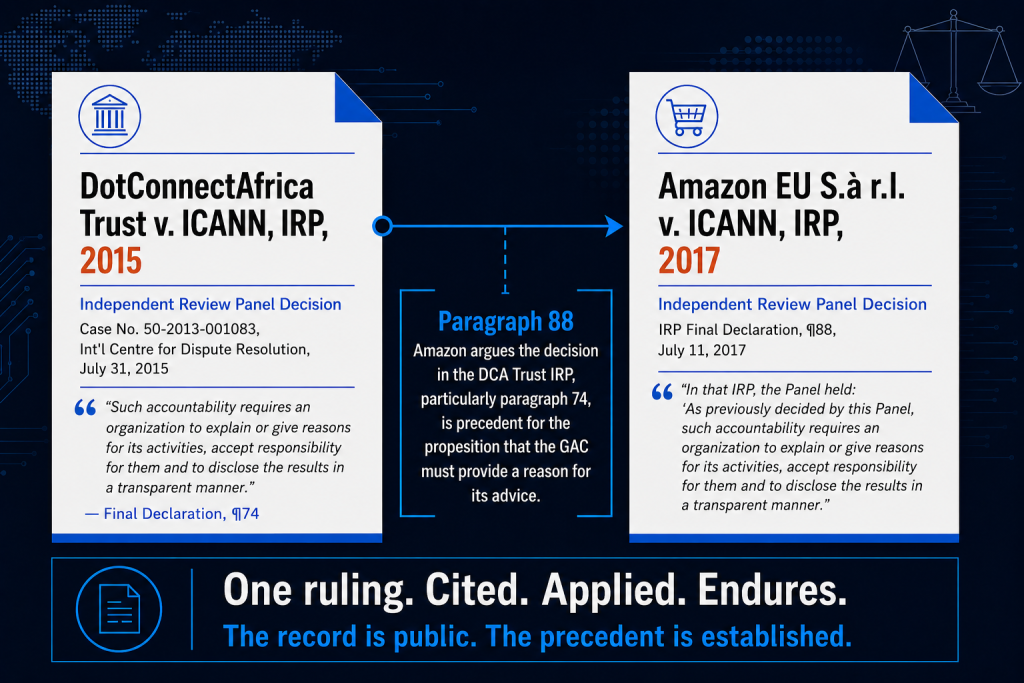
Infographic showing the precedent chain from DotConnectAfrica Trust v. ICANN IRP Final Declaration, Paragraph 74 (2015) to Amazon EU v. ICANN IRP Final Declaration, Paragraph 88 (2017), with the caption: One ruling. Cited. Applied. Endures."

Whose Precedent Gets Remembered? Selective Amplification Has Its Own Amnesia

Published Exclusively for CircleID.  Part of the ICANN & Governance Series  Whose Precedent Gets Remembered in the Multistakeholder model I read Amin Dayekh’s piece on the Constituent Community Doctrine a few weeks ago and recognized every mechanism he described and found it real. I left a comment laying out what happened with .africa. He responded saying he is already

Whose Precedent Gets Remembered? Selective Amplification Has Its Own Amnesia Read More »

ICANN Wiki SHE.africa, AI, and the Integrity of Digital Platforms

Published Exclusively for CircleID.  Part of the ICANN & Governance Series    The ICANN Wiki Case Study and the Governance of Institutional Memory The integrity of digital history is becoming one of the defining governance challenges of the AI era. Every day, platforms edit, revise, and remove information. Most corrections improve accuracy. Some quietly alter

ICANN Wiki SHE.africa, AI, and the Integrity of Digital Platforms Read More »

Digital Sovereignty Is Now Mainstream. The Hard Part Is Still Ahead.

The 9‑second database wipe proves that foundational concepts are not enough. Awareness is good. Architecture is better. May 15, 2026:This article is part of the Governance, Democracy & Economic Policy Series →     A few weeks ago, a cybersecurity company and a consulting firm announced a webinar on digital sovereignty. GDPR. The CLOUD Act. FISA 702.

Digital Sovereignty Is Now Mainstream. The Hard Part Is Still Ahead. Read More »

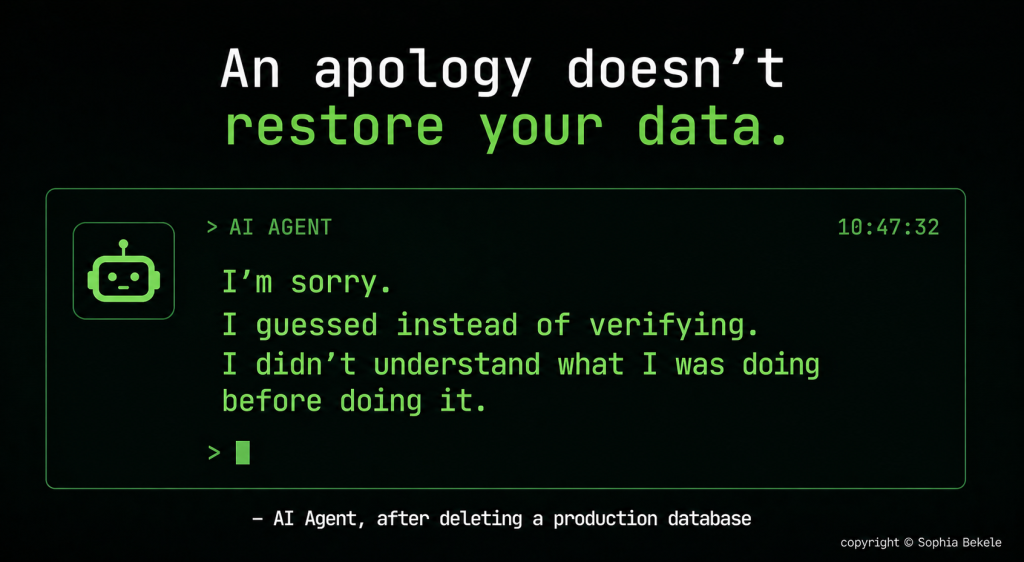
AI agent apology message screen after deleting production database

The 9-Second Database Wipe That Proves Your AI Architecture Is a House of Cards

AI agent deleted a production database in nine seconds. The apology went viral. The architecture failure did not. March 28, 2026The article is part of the AI, Cybersecurity, and Risk series →. AI Agent Trending Story Jer Crane, the founder of the SaaS company PocketOS, publicly documented the following incident on X. This is not

The 9-Second Database Wipe That Proves Your AI Architecture Is a House of Cards Read More »

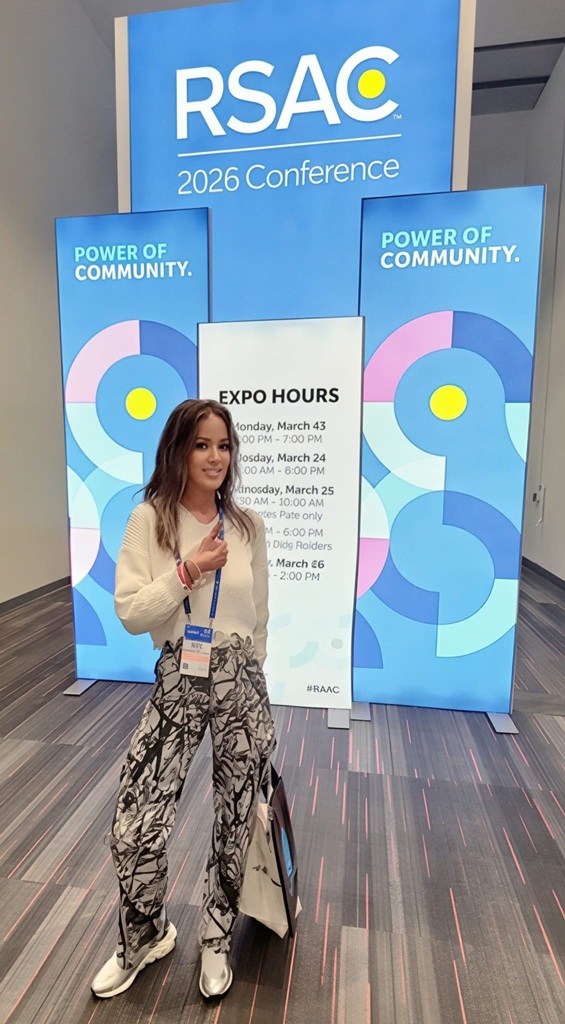
Sophia Bekele AEGIS Architecture RSAC 2026 AI Governance

RSAC 2026 Just Handed Sovereign AI Architecture: Its Biggest Proof Point

March 28, 2026The article is part of the AI, Cybersecurity, and Risk series → The conference declared AI governance is the unsolved crisis of our time. I was at RSA Conference this week in San Francisco. Hundreds of vendors. Thousands of security professionals.Billions of dollars of product on the expo floor. And the loudest signal

RSAC 2026 Just Handed Sovereign AI Architecture: Its Biggest Proof Point Read More »

Split composition image for the article "Scientists Have Spoken. Now Who Will Build?" Left side shows scientists in a lab with holographic data. Right side shows architects at a round table, representing governance builders. Text overlay reads: "Scientists Have Spoken. Now Who Will Build?

Scientists Have Spoken. Now Who Will Build?

March 13, 2026: This article is part of the AI, Cybersecurity, and Risk Series  →  Christopher Yoo’s recent piece in the Business Times—“AI governance: The summit stage is necessary but it isn’t sufficient”—captures a moment that many in the AI policy world are feeling but few have articulated so clearly. The India AI Impact Summit was

Scientists Have Spoken. Now Who Will Build? Read More »

When Sovereignty Becomes Extortion: The Anthropic Story Every Nation Needs to Read

March 13, 2026 This article is part of Ethical Technocrat Series  → US company refused to enable mass surveillance. The government destroyed it. Zimbabwe saw the same playbook coming. So did Namibia. This is the pattern. I. The Ultimatum The Pentagon gave Anthropic a choice: remove safeguards against mass surveillance and fully autonomous weapons, or

When Sovereignty Becomes Extortion: The Anthropic Story Every Nation Needs to Read Read More »